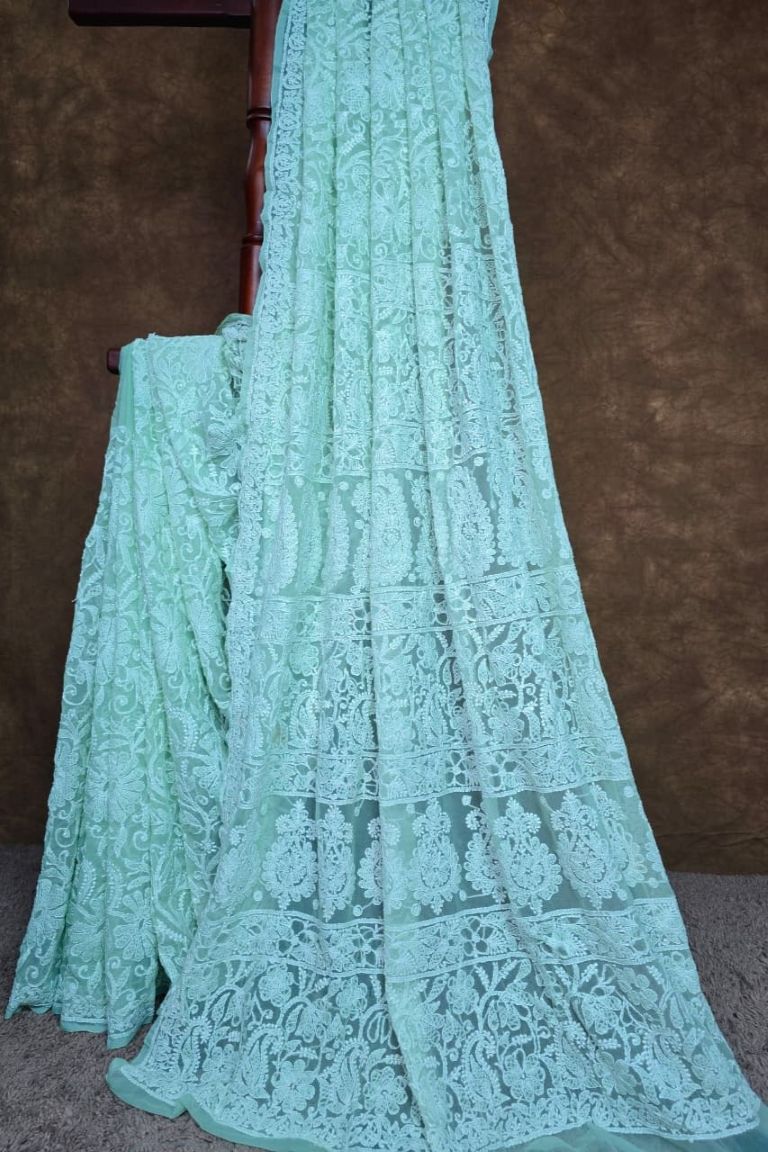
A saree in black and white, this chiffon saree brings the intricate visual rhythm of Tepchi chikankari into a distinctly modern palette. The deep black ground gives the textile a quietly dramatic presence, while fine white threadwork traces an organic field of delicate, flowing motifs across the length of the saree. The lightweight, translucent character of chiffon adds movement and softness to the overall composition, allowing the white embroidery to remain the visual focus. Rather than relying on heavy embellishment, the saree builds its character through contrast, repetition and the graphic quality of white against black. The result is an Indian saree with a refined sensibility—equally compelling for a younger woman styling it with a contemporary blouse or for a mature wearer who prefers understated detail. It is a distinctive choice for anyone looking for a black festive saree, occasion wear saree or sophisticated evening Indian ensemble.
Midnight Ground, White Linework
The saree is rendered in a rich, uninterrupted black, creating a strong canvas for the white threadwork. This pairing gives the textile a sharp, editorial quality while retaining the delicacy associated with chikankari-inspired detailing.
Chiffon in Motion
The chiffon construction has a visibly light and fluid appearance, with a soft, airy surface that allows the saree to fall naturally around the body. Its sheer visual quality keeps the extensive embroidery from feeling visually heavy, giving the overall look a sense of lightness.
A Field of Handcrafted Fine White Motifs
White Handcrafted Tepchi Chikankari threadwork is distributed generously across the black surface in slender, organic patterns. The motifs appear fluid and botanical in character, creating an intricate all-over composition rather than a sparse, isolated arrangement.
A Graphic Approach to Chikankari
What distinguishes this saree is the contrast between the traditional visual language of white chikankari threadwork and the almost graphic impact of the black-and-white palette. Seen from a distance, the embroidery creates a striking texture; closer in, the fine lines reveal a much more intricate surface.
The Pallu as a Visual Anchor
The extended end of the saree carries the same black-and-white embroidered language, with the concentration of motifs creating a richly detailed finish. A clean black edge frames the textile without introducing another colour, keeping the composition focused and cohesive.
Styling in Monochrome
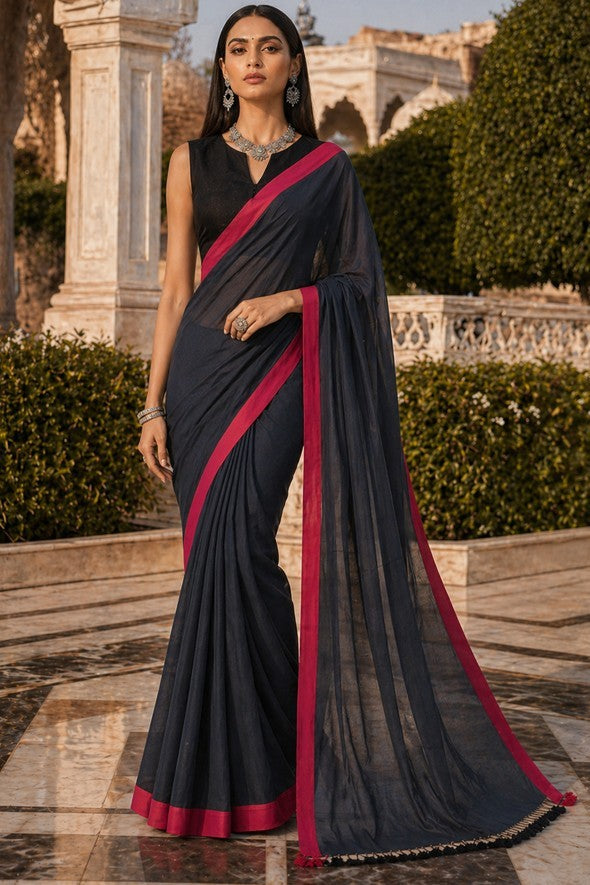
A black, white or charcoal blouse can reinforce the saree's restrained palette, while a sharply cut contemporary blouse can introduce a more fashion-led silhouette. For jewellery, consider silver-toned pieces, pearls or sculptural metal accents; a compact black bag and minimal footwear would keep the embroidery at the centre of the look.
From Day Appointments to Evening Gatherings
Its character allows this saree to move between settings with a change of styling. Pair it with a structured blouse and restrained accessories for an elevated office wear saree interpretation, or introduce statement jewellery and a more defined blouse for dinners, festive gatherings, intimate celebrations and cultural occasions.
For Girls & Women with Different Style Codes
Younger women can give this saree a contemporary direction with a sleeveless, high-neck or sharply tailored blouse and pared-back jewellery, allowing the embroidery to feel graphic rather than overtly traditional. For mature women, the same textile works beautifully with a classic-cut blouse, refined earrings and understated accessories, making it a considered choice across generations.
Blouse Piece Included
A matching blouse piece is included with the saree, allowing the black-and-white aesthetic to continue into the blouse styling. No additional colour or embellishment is assumed beyond what is visible and visual identity: intricate, monochrome and quietly dramatic. For the woman drawn to an Indian saree with strong graphic character rather specified.
A black chiffon canvas covered in white Tepchi Chikankari gives this saree its particular visual identity: intricate, monochrome and quietly dramatic. For the woman drawn to an Indian saree with strong graphic character rather than excessive ornamentation, it offers a distinctive foundation for both contemporary and traditional styling.