Cart
0
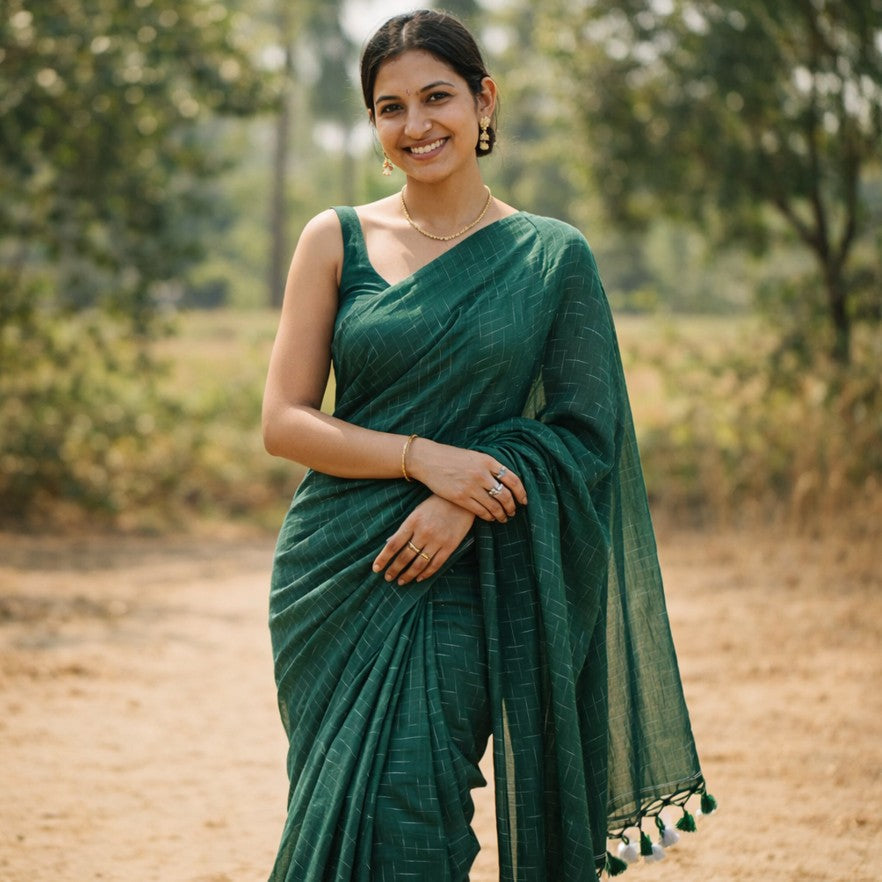
India’s climate doesn’t really believe in moderation. We move from sticky summers to humid monsoons and then to those brief but noticeable winter chills. When you’ve spent years around textiles, observing how different fibers behave in these shifting conditions, one thing becomes very clear: few fabrics handle Indian weather as effortlessly as handloom cotton. And when that cotton is woven into a saree, the experience becomes even more interesting.
Let’s start with the most obvious season—summer. Anyone who has worn synthetic fabrics during a North Indian heatwave knows the discomfort. Polyester and blended materials trap heat and moisture, making the body feel warmer than it already is. Handloom cotton behaves very differently. Cotton fibers are naturally breathable, which means they allow air to circulate between the yarns. In handloom weaving, this breathability is often even better because the weave structure tends to be slightly more open than mass-produced mill fabrics.
What that means in practical terms is simple: your body stays cooler. Sweat evaporates faster, and the fabric doesn’t cling in unpleasant ways. When temperatures climb past 35°C, that small difference becomes the reason you actually feel comfortable through the day.
Another thing people often underestimate about handloom cotton sarees is how they respond to humidity. During monsoon months, fabrics that trap moisture become heavy and sticky. Cotton absorbs moisture, but it also releases it quickly. Because handloom cotton yarns are usually less tightly processed than mill yarns, they retain this natural absorbency better. The result is a saree that feels light even in humid conditions.
Shop Now Handloom Mark Cotton Sarees
Then comes the question millennials often ask: is cotton practical for daily wear? The answer lies in how the saree is woven. Handloom cotton sarees develop character with every wash. The fibers soften, the drape improves, and the fabric begins to fall more naturally around the body. From a textile perspective, this happens because repeated washing relaxes the twist in cotton yarns and allows the weave to settle.
That’s why an older handloom cotton saree often feels better than a brand-new one.
There’s also the matter of skin comfort, which becomes more important in hot weather than most people realize. Synthetic fabrics can sometimes cause irritation because they don’t allow the skin to breathe properly. Cotton, being a natural cellulose fiber, is far gentler on the skin. For people who spend long hours outdoors, commuting, working, or attending events, this difference is noticeable by the end of the day.
Now let’s talk about versatility across seasons. While cotton is associated with summer, a handloom cotton saree works surprisingly well in mild winter too. The secret lies in layering. Cotton itself is breathable but not excessively insulating, which means you can pair it with shawls, blouses made from thicker fabrics, or light jackets without feeling bulky. In textile science terms, cotton acts as a good base layer because it manages moisture well while allowing additional layers to provide warmth.
Another aspect worth discussing is structure. Handloom weaving gives cotton sarees a certain body. Unlike ultra-smooth mill fabrics that sometimes feel slippery, handloom cotton holds pleats neatly. This makes it easier to wear through long workdays or events without constantly adjusting the drape.
People who are new to sarees often find handloom cotton surprisingly manageable once they get used to it.
There’s also a sensory element that only handloom textiles provide. When you look closely at a handloom cotton saree, you’ll notice subtle irregularities in the weave. These aren’t defects—they are signatures of human craftsmanship. Each thread passes through the loom by hand, creating a texture that machine production cannot replicate in the same way.
For someone who studies textiles, this tactile quality is fascinating. The fabric feels alive in a way that factory-perfect cloth often does not.
From a sustainability perspective, handloom cotton also deserves attention. Powerloom and synthetic fabrics rely heavily on electricity, chemical processing, and large-scale manufacturing. Handloom weaving, on the other hand, uses minimal energy and supports artisan communities whose skills have been refined over generations.
Choosing a handloom cotton saree therefore isn’t just about comfort—it’s also about supporting a slower, more responsible textile ecosystem.
Finally, there’s the everyday practicality. Handloom cotton sarees are relatively easy to maintain. They wash well, age gracefully, and adapt to casual, formal and semi-formal settings. A simple change in blouse, accessories, or draping style can transform the same saree from office wear to an evening outing.
When it comes to dealing with India’s varied climate, handloom cotton simply makes sense. It breathes in the heat, handles humidity well, works with layering in cooler weather, and becomes more comfortable the longer you own it.
And once you start wearing it regularly, it’s hard to go back to anything that feels less natural.
Grey Handloom Cotton Saree with White Woven Motifs and Tassel Pallu
Breezy Green Handloom Cotton Saree Featuring Floral Pallu Magic