Cart
0
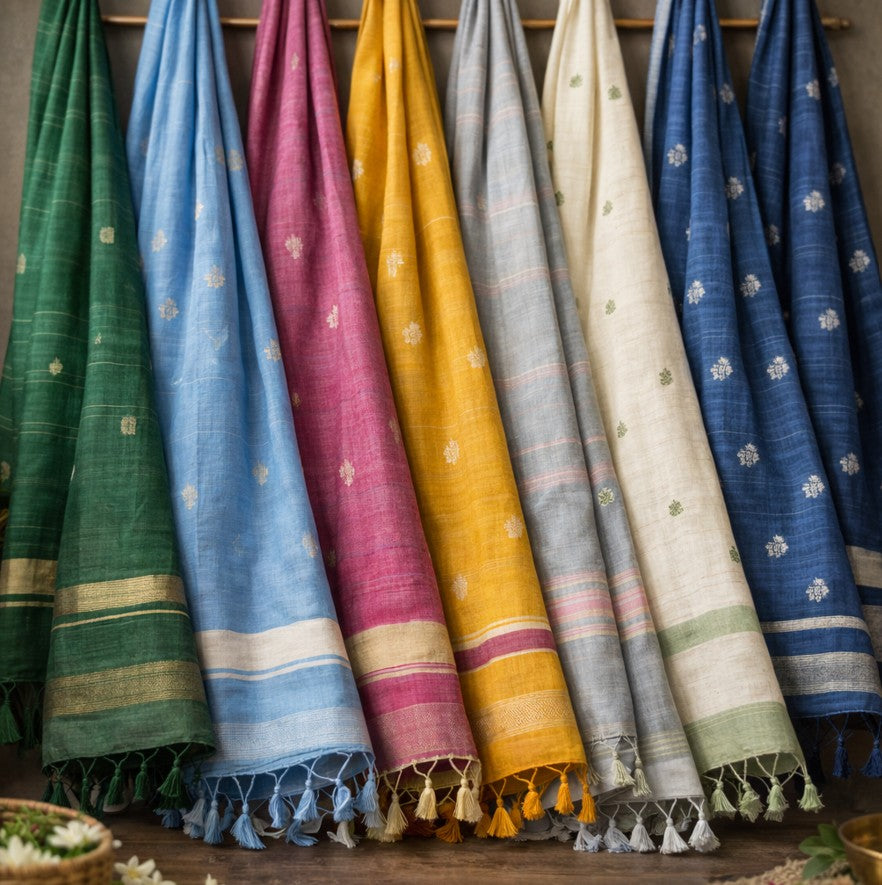
“Every handwoven fabric carries the rhythm of the loom and the patience of the hands that created it.”
When you buy a handloom cotton saree, you are not simply picking another piece of clothing from a rack. You are choosing something that has been carefully woven by skilled artisans, thread by thread. Each saree reflects patience, tradition, and craftsmanship. But if you have ever tried shopping for one, you might have realized that the choices can feel overwhelming.
From different weaves to textures and price ranges, buying a handloom cotton saree can leave many people wondering where to start. This guide walks you through a few simple things to keep in mind so you can choose a saree that suits your taste, comfort, and purpose.
Start with the Fabric Feel
The first thing most people notice about a handloom cotton saree is the texture. Unlike synthetic fabrics, handloom cotton has a slightly natural feel. It is breathable and comfortable, which makes it especially suitable for warmer weather.
When you touch the fabric, it should feel soft but not overly slippery. Handloom cotton often has a slightly uneven texture because it is woven on traditional looms rather than machines. That small irregularity is not a flaw; it is actually a sign that the saree has been woven by hand.
Check the Weave Closely
One easy way to identify a genuine handloom saree is to examine the weave. Handwoven sarees usually show tiny inconsistencies in the pattern or threads. These variations occur because human hands guide the loom instead of automated machines.
You may also notice that the reverse side of the saree has loose threads near the design areas. That often indicates handwork. Machine-made sarees usually have very uniform patterns and a cleaner back.
If possible, hold the saree against the light. The weaving structure of handloom cotton often becomes more visible when light passes through it.
Handloom Mark Saree
One way to ensure authenticity when buying a handloom cotton saree is to look for the Handloom Mark.
This official certification, issued by the Government of India, guarantees that the saree has been genuinely handwoven by registered artisans on traditional looms. Sarees with this mark meet specific quality standards and help buyers distinguish between true handloom products and machine-made imitations. Choosing a Handloom Mark saree not only assures you of the craftsmanship but also supports weavers and preserves India’s rich textile heritage.
Shop Now Handloom Mark Cotton Sarees
Handloom Cotton Saree Weight
Choose Colors That Fit Your Routine
Color selection is another important part of buying a handloom cotton saree. Some people prefer subtle shades for daily use, while others enjoy bold colors for special occasions.
If you plan to wear the saree regularly, earthy tones, pastels, or simple stripes can be very practical. They are easier to pair with different blouses and accessories. On the other hand, vibrant shades and intricate borders can be ideal for gatherings, celebrations, or cultural events.
Think about where you are most likely to wear the saree before making a decision. This helps ensure it doesn’t just sit in your wardrobe unused.
Look at the Border and Pallu
The border and pallu often define the character of a saree. Some designs feature narrow borders with minimal detailing, while others highlight elaborate motifs or geometric patterns.
When shopping, take a moment to spread out the saree and see how the border flows across the length. The pallu—the decorated end of the saree—should complement the overall design rather than overpower it.
Sometimes a simple body paired with an interesting pallu creates a very balanced look.
Consider Comfort Above All
A saree may look appealing on display, but comfort matters more when you actually wear it. Handloom cotton sarees are known for being breathable and lightweight, but different weaves still vary in thickness.
If you are new to wearing sarees, you might prefer softer weaves that drape easily. People who wear sarees regularly may enjoy crisp cotton styles that hold their shape.
Trying the saree over your shoulder or feeling the fabric in your hands can give you a good sense of how comfortable it will be.
Support the Craft
Buying a handloom cotton saree also helps support artisan communities that continue to preserve traditional weaving techniques. Behind every saree is a weaver who has spent hours creating it with care and concentration.
Choosing authentic handloom products encourages these crafts to continue for future generations.
A Thought Before You Buy
A handloom cotton saree is more than a purchase. It is something you may wear for years, share with family, or even pass down later. Taking a little time to understand the fabric, weave, and design can make the experience much more enjoyable.
And once you find the right one, it will not just be another item in your wardrobe. It will be a piece that carries the story of skilled hands, heritage, and everyday beauty.
Pista Green Jamdani Handloom Cotton Saree
Handloom Cotton Saree in Deep Magenta with Soft Beige Border