Cart
0

Few textiles capture the poetry of handcraft as gracefully as the Chikankari saree. Rooted in the heart of Lucknow, this centuries-old embroidery tradition transforms fine fabric into an ethereal masterpiece—each thread whispering stories of patience, artistry, and heritage. Behind the delicate motifs of flowers, vines, and paisleys lies a laborious process, executed entirely by hand. To truly appreciate a Chikankari saree, one must understand the journey it undertakes—from a simple needle to the final drape.
The Soul of Chikankari: A Heritage of Elegance
Chikankari is believed to have been introduced by Nur Jahan in the 17th century. Over the years, it evolved into a cultural identity for Lucknow and a symbol of feminine grace. Traditionally crafted on muslin, the embroidery has since expanded to cotton, silk, georgette, chiffon, and organza—each fabric lending a distinct texture and fall to the final saree. Yet, regardless of material or motif, the essence remains unchanged: a devotion to handcraft.
Step 1: The Fabric Selection — The Canvas of the Craft
The journey begins with the choice of fabric. The artisans, or karigars, often favor lightweight, breathable fabrics like muslin or cotton for their fine weave, which allows the needle to glide effortlessly. For contemporary appeal, chiffon, georgette, and organza are also widely used. The fabric is washed and stretched on a wooden frame to ensure a smooth surface. This preparation is crucial—any imperfection could distort the embroidery later.
Step 2: The Design Block Printing — Outlining the Dream
Before the first stitch is made, the intricate designs are transferred onto the fabric using a temporary blue or grey dye made from indigo or charcoal. Wooden blocks, carved by hand with floral or geometric motifs, are dipped in the dye and stamped carefully onto the fabric. This stage, known as chhapai, requires remarkable precision. A single misaligned block can disrupt the continuity of the design. The motifs often include traditional patterns such as butis (small floral motifs), jaalis (mesh-like patterns), and bel (creepers and vines).
Step 3: The Embroidery — Heartbeat of Chikankari
Once the outlines are printed, the fabric passes into the hands of the embroiderers—mostly women from nearby villages who have inherited this art from generations before them. They sit in groups, often in courtyards or small workshops, needles moving rhythmically through the fabric.
Chikankari embroidery employs more than 30 distinct stitches, each with a specific aesthetic purpose. Some of the most celebrated ones include:
-
Tepchi – a simple running stitch used for outlining.
-
Bakhiya (Shadow Work) – where the embroidery is done on the back of the fabric to create a shadow effect on the front.
-
Phanda and Murri – tiny knot-like stitches resembling grains of rice or millet, adding texture and dimension.
-
Jali Work – a delicate openwork that mimics lace, achieved by skillfully pushing apart warp and weft threads without cutting them.
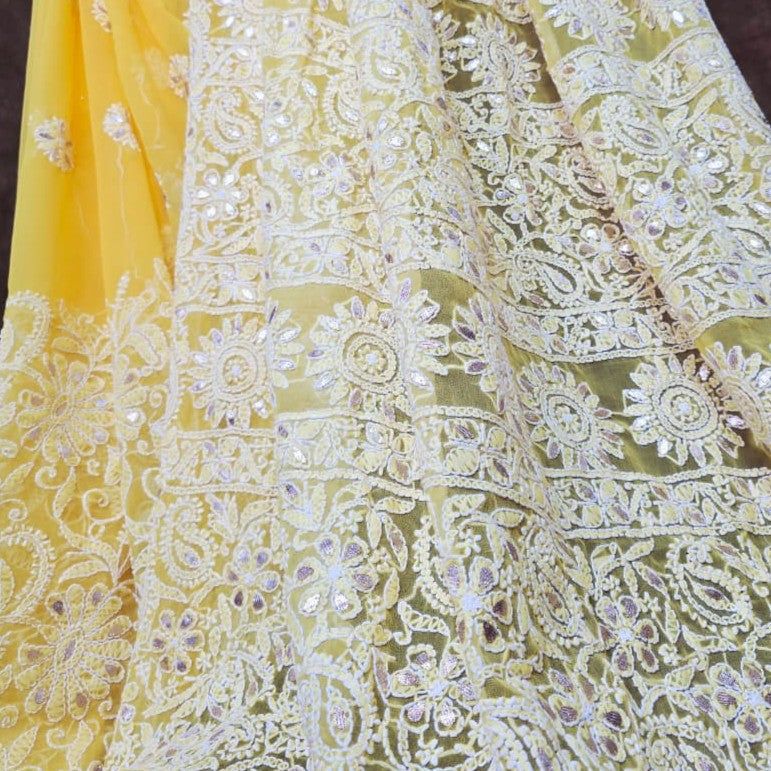
Each motif is built slowly, thread by thread, with astonishing consistency. A single saree can take anywhere between two weeks to six months to complete, depending on the intricacy of the work. What makes Chikankari extraordinary is its human touch—no two sarees are ever identical.
Step 4: Washing and Dyeing — Revealing the Beauty
After embroidery, the saree undergoes a meticulous washing process to remove the block-printed outlines. The fabric is soaked, scrubbed gently, and then sun-dried, revealing the pure white or pastel-toned embroidery in its full glory. If the saree is to be dyed, natural or eco-friendly dyes are used to achieve soft hues like blush pink, mint green, or ivory. The color palette is intentionally subtle—designed to complement the delicate nature of the stitch work.
This washing and finishing stage is not just about cleaning—it is the final unveiling, where the hidden artistry of the stitches emerges clearly against the fabric.
Step 5: Finishing and Quality Check — Perfection in Every Thread
In the final step, the saree is ironed, its edges hemmed, and quality checked for uniformity and neatness. Senior artisans inspect the embroidery to ensure there are no loose threads or misaligned motifs. Only then does the saree reach the market—ready to be draped by someone who may never know the many hands and hearts that shaped it.
The Human Touch: Artisans and Their Legacy
Behind every Chikankari saree stands a community of dedicated artisans—mostly women—who continue to preserve this delicate art despite modern challenges. Their workspaces may be humble, but their craftsmanship rivals any luxury couture. For them, embroidery is not merely a livelihood but a form of expression. Each stitch is imbued with emotion, patience, and pride.
Organizations and designers are now collaborating with these artisans to ensure fair wages, recognition, and global visibility. Chikankari’s presence on international runways and in luxury boutiques is a testament to its timeless appeal.
A Legacy Woven in Threads
From the first imprint of a wooden block to the final swish of a draped saree, the making of a Chikankari saree is a journey of devotion. It is a dance between tradition and creativity, where time slows down to honor detail and beauty. Every stitch tells a story—of heritage, artistry, and human resilience.
When one drapes a Chikankari saree, they are not just wearing fabric; they are wearing centuries of skill, culture, and grace, lovingly stitched into every fold.
Yellow Chiffon Lucknowi Chikankari Saree with White Thread Work
Red Chikankari Saree in Breezy Chiffon
Pastel Green Chiffon Lucknowi Chikankari Saree with Full Jaal & Gota Patti Detailing